I. The Line We Got Wrong
I grew up six kilometers from the United States. Close enough to see the Franklin Mountains from my bedroom window in Ciudad Juárez, close enough to cross the bridge on weekends to shop, to go to the dentist, to visit cousins. The border was not a wound in my childhood. It was a place — a specific, textured, complicated place — where two worlds met and created a third one that belonged entirely to itself.
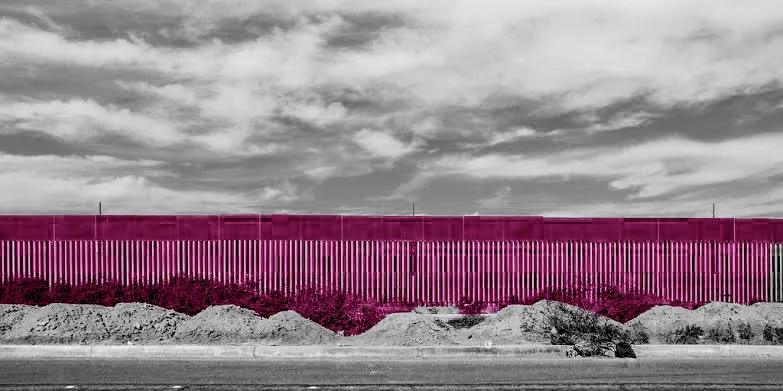
But when I arrived at UC Berkeley to study architecture, I quickly realized that the border was not treated as a place. It was treated as a problem. A line to be secured, contested, debated, or erased — but never designed. Never imagined as a site of opportunity. The most crossed international boundary in the world, and architecture had largely turned its back on it.
My 2021 graduate thesis, “The Opportunity In Between: The Advantage of the Edge,” was an attempt to change that. Not to ignore the politics or the pain. But to ask a different question: what if we designed for what the border already is — not a barrier, but a threshold? Not a division, but the most interesting overlap in North America?
II. What Architecture Misses When It Looks Away
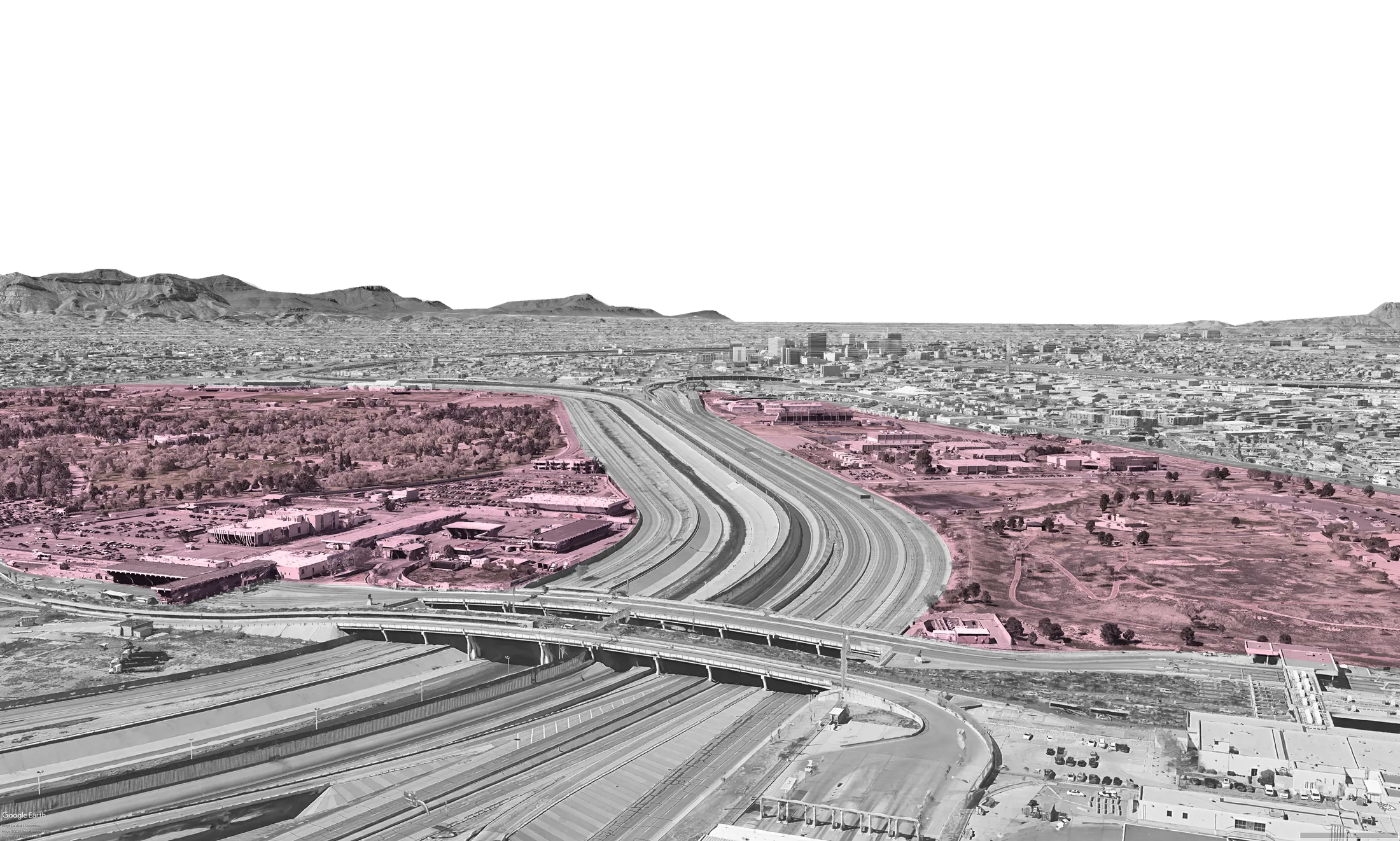
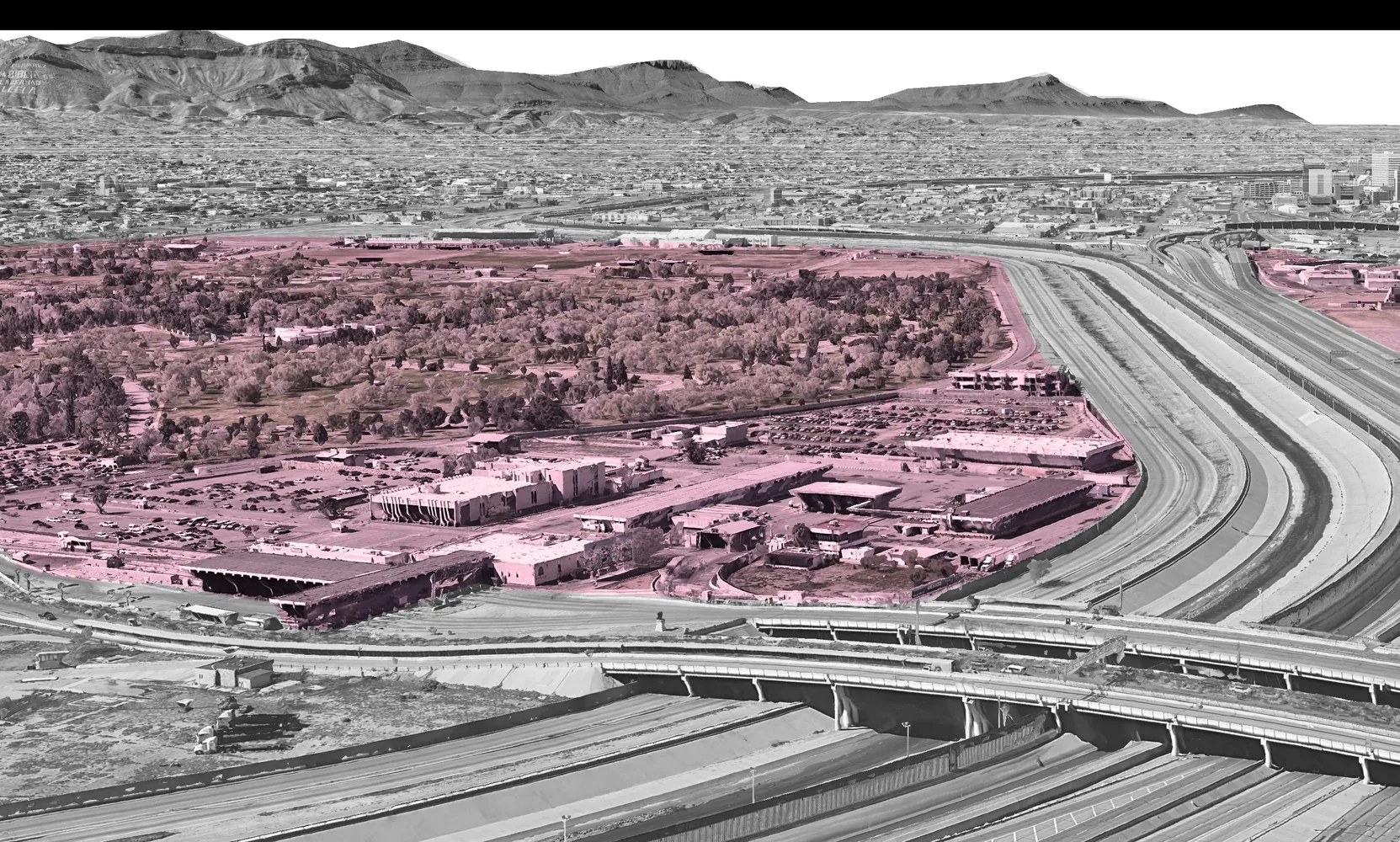
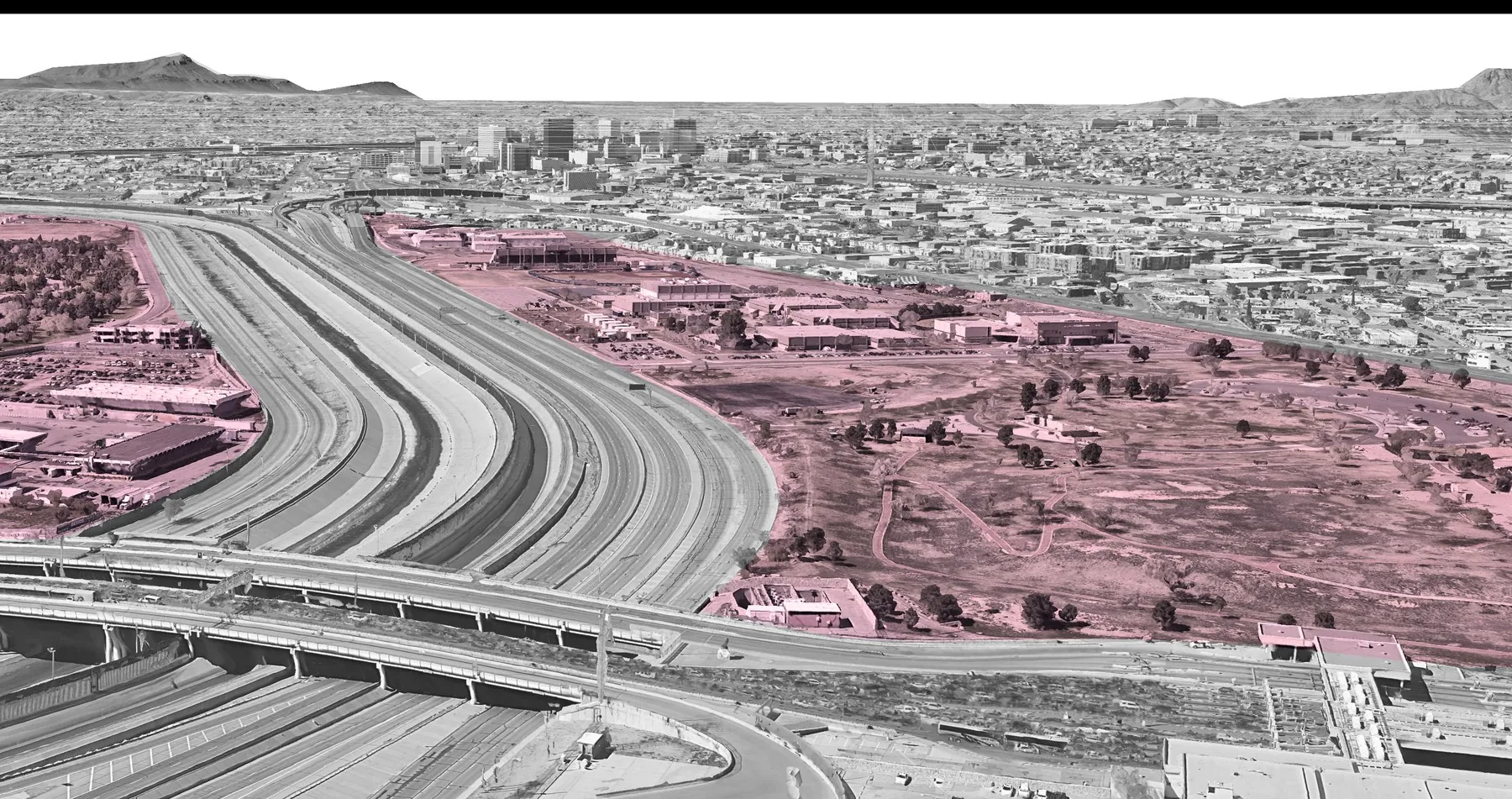
Ciudad Juárez and El Paso are, by any meaningful measure, one city. Their combined population exceeds two million. They share an economy, a labor force, a culture, and an air basin. Families live on both sides. People cross daily — for work, for school, for groceries, for life. And yet the physical space between them — the concrete channel that replaced the Rio Grande after the Chamizal Convention of 1963 — is a dead zone. Debris. Emptiness. A scar the size of a highway that neither country has claimed as worth designing.
This is an architectural failure. When we allow a space this significant — this historically loaded, this alive with daily human movement — to become a void, we are not being neutral. We are making a statement. We are saying: the people who live here do not deserve a place.
Borders are not just political constructs. They are spatial conditions — and spatial conditions can be designed. The question is whether we choose to design them with intention, or abandon them to neglect and fear.
III. The Third Condition
My thesis proposed something simple and radical: that when two countries, two languages, two architectures overlap, they produce a third condition — something that belongs to neither side and both sides simultaneously. This is not weakness. This is where the most interesting things happen.
I proposed a program for the Chamizal zone — the concrete channel between Juárez and El Paso — that would activate the edge rather than erase it. An elementary school where children on both sides share a playground through a see-through wall. Public green space that unfolds across both banks. Currency exchange, health care, cultural facilities that respond to what the communities on each side already need from each other. Not a binational utopia. Not an erasure of sovereignty. But an acknowledgment that the border is already a place where people live, and they deserve architecture that takes that seriously.
The key principle: connected structures, not necessarily accessible from both sides. The border remains. But something happening on one side triggers something on the other. Co-dependency acknowledged. Made visible. Made beautiful.
IV. What the Edge Teaches Us About Design
There is a reason the most innovative architecture in the world often happens at thresholds. At the edge between land and water. Between inside and outside. Between public and private. The edge is where pressure accumulates, where two different conditions are forced to negotiate, where the most creative solutions emerge out of necessity.
The border is the most extreme version of this. It is a threshold that carries the weight of history, economics, identity, and politics in every square meter. To design there is not just an architectural challenge. It is a civic act.
What I learned from four years of living in San Francisco — designing luxury interiors for clients whose problems are very different from those of a border city — is that the most meaningful design questions are not about materials or aesthetics. They are about who gets to be in a space, and what that space tells them about their place in the world. A playground that lets two groups of children see each other through a wall is not a neutral act. It is an argument. It says: you are not so different. It says: the line between you is real, but it is not everything.
V. Why This Matters Now
The U.S.-Mexico border has never been more politically charged or more architecturally neglected. Billions are spent on walls, surveillance technology, checkpoints — and almost nothing on the communities that live in the shadow of all of it. The people of Juárez and El Paso have built their own informal solutions: the rhythms of daily crossing, the social networks that span both sides, the hybrid culture that code-switches between English and Spanish the way I do in my own head. Architecture should be meeting them there.
The border is not a problem to be solved. It is a condition to be designed. And the designers who will do that work most honestly are the ones who grew up there — who know what it feels like to carry two countries inside you, to belong completely to neither and both, to understand the advantage of the edge not as a theory but as a lived experience.
I am one of those designers. And I am not done with this question.
Jessica Gameros is an architect based in San Francisco, CA. She holds a Master of Architecture from UC Berkeley (2021) and a Master of Science in Construction Management from the University of Texas at El Paso. She grew up in Ciudad Juárez, Mexico.